If you’re considering custom software for the first time, start by clearly defining the problem you want to solve. Then map out which processes or needs off-the-shelf software doesn’t cover, set a realistic budget, and find a development partner that fits your situation. This article answers the most frequently asked questions step by step, so you can begin this journey well prepared.
What are the first steps when having custom software built?
The first step is to concretely describe the problem you want to solve. Write down which processes are currently handled manually, which tools you already use, and where they fall short. Then determine who the end users are and what they expect from the software. Only once you have this clear does it make sense to start talking to a developer.
In practice, most companies go through the following steps before the first line of code is written:
- Problem analysis: Describe the bottleneck as concretely as possible. What is going wrong now, how much time or money does it cost, and who is affected?
- User research: Talk to the people who will use the software on a daily basis. Their input largely determines the success of the final product.
- Feature list: Distinguish between what the software must do (must-haves) and what is nice-to-have. This prevents scope creep and budget overruns.
- Market exploration: Check whether there is an off-the-shelf solution that covers 80% of your needs. Sometimes custom software isn’t necessary.
- Initial conversations with development partners: Ask multiple parties for an exploratory conversation and a rough estimate, without a formal quote yet.
When is custom software the right choice over off-the-shelf software?
Custom software is the right choice when standard packages don’t adequately support your workflows, when you become dependent on licensing costs that quickly add up, or when you want to gain a competitive advantage with a unique digital solution. For generic needs such as accounting or email, off-the-shelf software is almost always more cost-effective.
A useful way to make the decision is to answer the following questions:
- Does the software need to connect to existing systems that don’t support standard integrations?
- Are your business processes so specific that customizations in off-the-shelf software are more expensive than building from scratch?
- Do you want full control over the data, the functionality, and future development?
- Is your user base growing quickly and do you want to avoid licensing costs scaling along with it?
If you answer two or more of these questions with yes, custom software is well worth serious consideration. When in doubt, a hybrid approach is sometimes also possible: a standard platform as a base with custom extensions on top.
How do you set a budget for a custom software project?
You set a realistic budget for custom software by estimating the number of features, estimating a development time per feature, and multiplying that by the developer’s hourly rate. Add a buffer of 20 to 30 percent for unforeseen changes. Also account for costs after delivery, such as hosting, maintenance, and further development.
Budget items that companies regularly overlook on a first project:
- Design and UX: A good user experience requires separate attention and time.
- Testing and quality assurance: Well-tested software saves a lot of rework costs later on.
- Integrations: Connecting to existing systems takes more time than expected.
- Documentation and training: Users need to learn how to work with the new software.
- Post-launch maintenance: Plan for at least 15 to 20 percent of the development costs per year for management and updates.
When requesting quotes, always ask for a breakdown by phase. This allows you to set priorities and, if desired, build in phases to spread the budget.
How do you choose the right software developer or development partner?
You choose the right software development partner based on technical experience in your domain, transparency about working methods and rates, and the quality of communication. Review reference projects, ask about the team composition, and verify that the partner understands your business question, not just the technical side.
Watch for these signals during the selection process:
- Does the partner ask questions about your business processes, or does the conversation immediately turn to technology?
- Is there a dedicated point of contact who speaks your language, both literally and figuratively?
- Does the partner work with a clear development process, such as Scrum or Agile, and do they explain it transparently?
- Are rates and contract terms clearly communicated upfront?
Preferably choose a partner with experience in projects within your sector. A developer who has previously built fintech or mobile applications will understand the context of your project faster and make fewer beginner mistakes.
What should a software requirements document contain?
A software requirements document describes what the application must do, for whom, under what technical constraints, and with what quality standards. The document forms the basis for the quote, the contract, and the acceptance test. Without this document, the developer and client work from different expectations.
A complete requirements document contains at minimum:
- Goal and context: What is the problem and who are the users?
- Functional requirements: What must the software concretely be able to do? Describe this as user scenarios (user stories).
- Non-functional requirements: Think about speed, availability, security, and scalability.
- Technical constraints: Which systems must the software integrate with? On what infrastructure will it run?
- Prioritization: Which features are must-haves for the first version, and which come later?
- Acceptance criteria: When is the software “done” and who decides that?
It’s fine if this document isn’t complete at the start. Begin with what you know and refine it together with the development partner in one or two discovery sessions.
What does the custom software development process look like in practice?
The custom software development process in practice almost always proceeds in iterations. After a discovery phase, you build working components in short sprints of two to four weeks, which you continually test and adjust. This keeps you in control of the direction and prevents you from delivering a product at the end of the project that no longer matches the need.
A typical trajectory looks like this:
- Discovery phase: Deep dive into the requirements, technical exploration, and drawing up the roadmap.
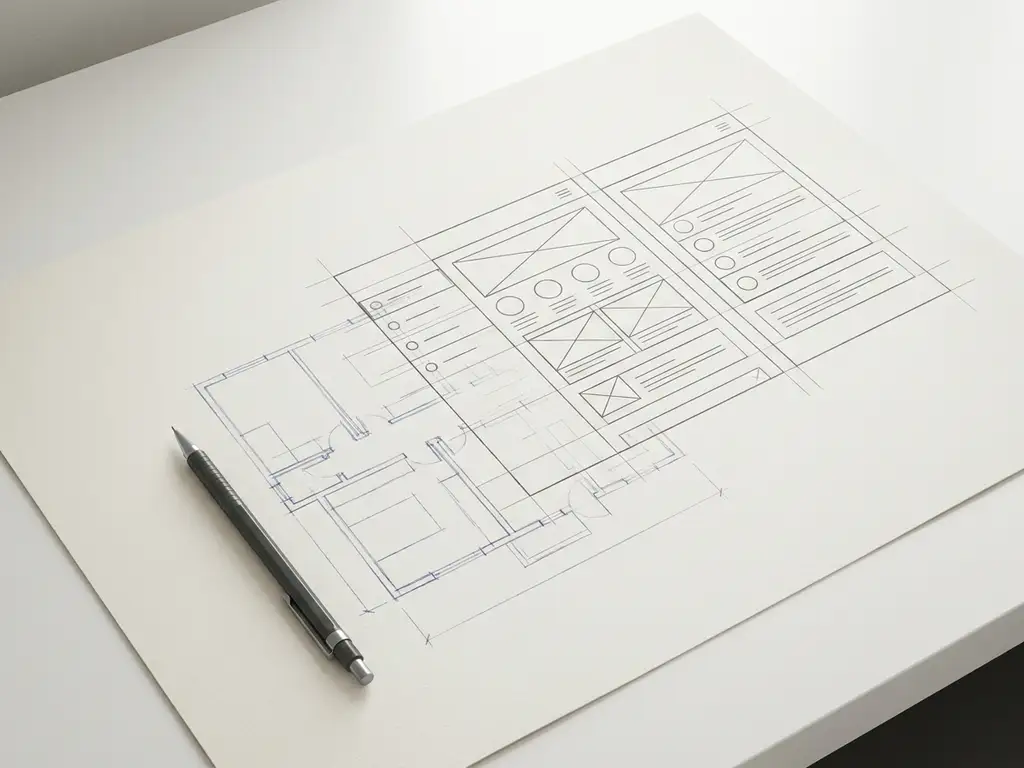
- Design: Wireframes and prototypes that you can test with end users before any code is written.
- Development in sprints: Each sprint focuses on a defined component, with a demo and feedback round at the end.
- Testing: Functional tests, user tests, and technical checks run throughout the entire process, not just at the end.
- Launch: The software goes live, preferably first for a limited group of users.
- Maintenance and further development: After launch, you collect feedback and plan improvements for future versions.
Good software development partners keep you actively involved throughout the entire process. You receive regular updates, have insight into progress, and can adjust course when priorities change.
How 3Bird helps with your first custom software project
At 3Bird, we guide companies considering custom software for the first time from the initial idea to a working product. We combine more than 25 years of experience in software development with a team of experienced developers in Nepal, led by Dutch fractional CTOs. This means you always have a trusted point of contact who speaks your language and understands your context, while benefiting from competitive rates.
What we concretely do for you:
- We help you draw up a clear requirements document, even if you don’t yet know exactly what you want.
- We guide the full software development cycle: from front-end and back-end to full-stack solutions.
- We work with flexible teams that you can scale up and down as the project grows.
- Our developers are available from €25 to €30 per hour, which is considerably more cost-effective than local alternatives without compromising on quality.
- We support a wide range of technologies, from React and Angular to Java, .NET, Flutter, and AWS.
Want to know whether custom software is the right step for your business? Feel free to contact 3Bird at +(31)75-7993038 or send an email to contact@3bird.nl. We’re happy to think along with you.