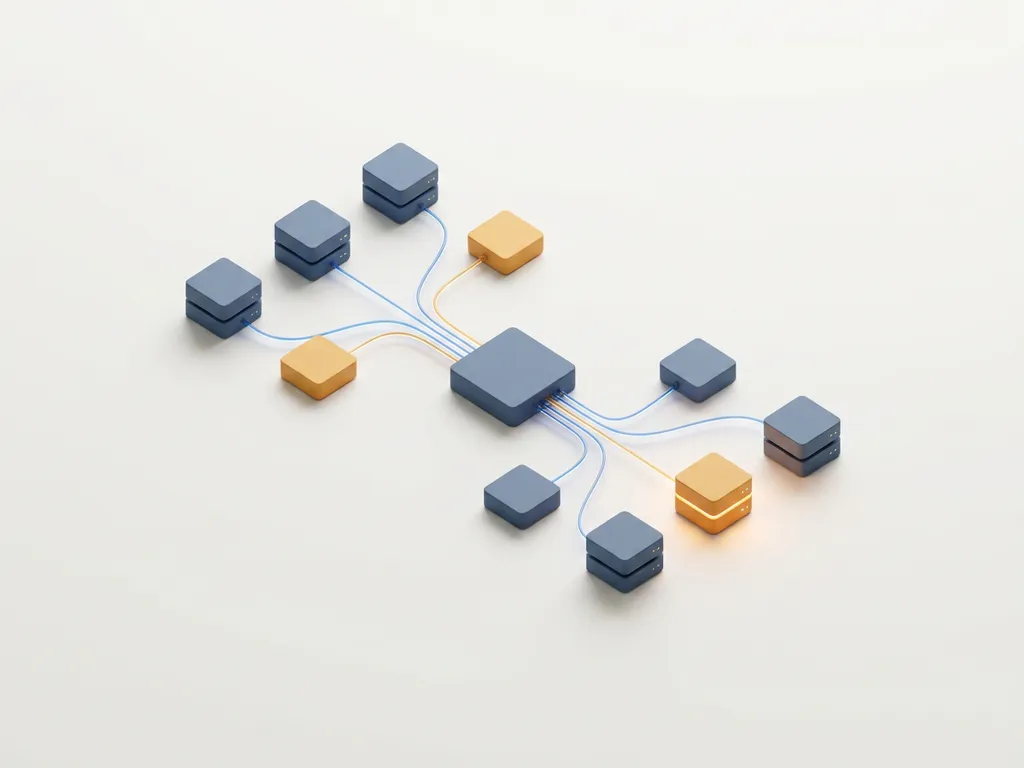
Edge computing changes IT outsourcing architecture by moving data processing closer to where data is generated, rather than routing everything through a central cloud or data center. This shift forces outsourced teams to design distributed systems with autonomous edge nodes, local processing logic, and smarter data routing. The questions below unpack exactly what that means for latency, data rules, team skills, contracts, and which industries feel the biggest impact.
What changes in IT outsourcing architecture when edge computing is introduced?
When edge computing enters an outsourced software system, the architecture shifts from a centralized model to a distributed one. Instead of all processing happening in a remote cloud environment, logic runs on edge nodes closer to the end user or device. Outsourced teams must now design for multiple processing layers, local data stores, and synchronization between edge and cloud components.
In practice, this means the outsourced development team can no longer treat the server as the single source of truth. They need to build systems that handle partial connectivity, manage state locally, and decide which data gets processed at the edge versus being sent upstream. This adds architectural complexity but also gives you systems that are faster, more resilient, and less dependent on a stable internet connection.
For companies working with remote development teams, this architectural shift also changes how work is divided. Front-end, back-end, and infrastructure responsibilities start to overlap more. The team needs to think about device firmware, network topology, and cloud integration all at once, rather than treating them as separate concerns.
How does edge computing affect latency in outsourced software systems?
Edge computing reduces latency in outsourced software systems by processing data locally rather than sending it to a distant server. When computation happens at or near the source, response times drop significantly, which matters most for real-time applications like industrial monitoring, healthcare devices, or interactive mobile experiences.
For outsourced teams, designing for low latency means making deliberate decisions about where logic lives. Time-sensitive operations, such as detecting a sensor anomaly or rendering a UI response, belong at the edge. Non-urgent tasks, like analytics aggregation or long-term storage, can travel to the cloud on a slower schedule.
The challenge is that outsourced developers working remotely need a clear picture of the network environment your users actually operate in. Latency targets differ between a factory floor with a local 5G network and a mobile app used across patchy rural connections. Sharing that context early helps the team make smarter architectural trade-offs from the start.
What are the data sovereignty challenges in edge computing outsourcing?
Data sovereignty becomes more complex in edge computing outsourcing because data is now processed and temporarily stored in multiple physical locations, not just one central server. This raises questions about which jurisdiction’s data protection rules apply, especially when edge nodes sit in different countries than your cloud infrastructure or your outsourcing partner’s team.
For companies in regulated industries, this is not just a technical question. If personal or financial data is processed at an edge node in a specific country, local data residency laws may apply. Your outsourced team needs to understand these rules and build compliance into the architecture, not bolt it on later.
Practical steps that help include mapping every location where data touches a node, defining data classification rules that determine what can leave a jurisdiction, and building encryption and access controls at the edge layer itself. Your outsourcing partner should be able to help you document this clearly, because auditors and regulators will ask.
How does edge computing change the skill requirements for outsourced development teams?
Edge computing requires outsourced development teams to combine skills that were previously handled by separate specialists. Developers need working knowledge of embedded systems or IoT protocols, distributed systems design, cloud integration, and network behavior, often within the same project. This is a broader skill set than most standard web or app development projects demand.
When you evaluate an outsourcing partner for edge computing work, look for experience with containerization tools like Docker and Kubernetes at the edge, familiarity with protocols such as MQTT or OPC-UA for device communication, and the ability to write code that degrades gracefully when connectivity drops. These are not common skills in every development pool.
Teams that work across technology stacks, from mobile and back-end to infrastructure, tend to adapt more smoothly to edge projects. If you want to explore what skill coverage looks like in practice, our development services give you a sense of the range we work across.
Should IT outsourcing contracts be structured differently for edge computing projects?
Yes, IT outsourcing contracts for edge computing projects should be structured differently because the scope, risk profile, and maintenance responsibilities are more complex than in standard cloud-based projects. Standard contracts often assume a single deployment environment and predictable infrastructure, neither of which applies when edge nodes are involved.
What to include in scope definitions
Clearly define which layers of the system the outsourced team owns. Edge firmware, middleware, cloud back-end, and monitoring dashboards may all be part of the project, but responsibilities can blur quickly. Spell out who handles device provisioning, who manages edge node updates, and what happens when a node goes offline unexpectedly.
How to handle ongoing maintenance and SLAs
Service level agreements need to account for the distributed nature of edge systems. Uptime targets that work for a single cloud app do not translate directly when you have dozens of edge nodes in different locations. Build in separate SLAs for edge availability, cloud availability, and data synchronization reliability, and agree on escalation paths for each.
Which industries benefit most from combining edge computing with IT outsourcing?
The industries that benefit most from combining edge computing with IT outsourcing are those where real-time data processing, low latency, or strict data locality requirements make centralized cloud processing impractical. These include manufacturing, healthcare, fintech, logistics, and mobile-first businesses operating in areas with unreliable connectivity.
- Manufacturing and industrial IoT: Machines generate data faster than it can be sent to the cloud. Edge processing lets outsourced teams build systems that detect faults and trigger responses in milliseconds.
- Healthcare: Patient monitoring devices need to act on data locally before transmitting summaries. Edge architecture also helps with data privacy compliance by limiting what leaves the device.
- Fintech and payments: Transaction validation and fraud detection benefit from edge logic that works even when connectivity is intermittent, keeping the user experience smooth.
- Logistics and fleet management: Vehicles and warehouses operate in low-connectivity environments. Edge computing lets outsourced teams build tracking and routing logic that works offline and syncs when a connection is available.
- Mobile and consumer apps: Apps that process data locally before syncing to a server feel faster and work better in areas with poor signal, which directly improves user retention.
If your business operates in any of these areas and you are evaluating whether IT outsourcing can support an edge computing project, the right partner makes a real difference. We at 3Bird work with experienced developers across these technology domains, managed by Dutch fractional CTOs who keep communication straightforward and the architecture sound. Feel free to get in touch to talk through what your project needs.
Related Articles
- What is the difference between no-code and custom software?
- How does custom software compare to existing SaaS solutions?
- What is the role of a steering committee in a larger software project?
- How does 5G technology impact IT outsourcing capabilities?
- What tools are essential for managing remote IT teams?